How Modern Buyers Decide Which Homes to Click
The average buyer spends less than 3 seconds deciding whether to click on a listing. Here is what drives that decision — and how to make sure your listings win the scroll.
How Modern Buyers Decide Which Homes to Click
The modern home search happens on a screen, usually a phone, usually at night, usually while doing something else. Buyers are scrolling through dozens — sometimes hundreds — of listings in a single session, making rapid-fire decisions about which properties deserve a closer look.
Research suggests the average buyer spends less than 3 seconds on a listing thumbnail before deciding to click or scroll past. In that window, your listing's hero image is doing all the work.
Understanding how buyers make these micro-decisions is the key to building a listing presentation that consistently wins the scroll.
The Hierarchy of Attention
When a buyer's eye lands on a listing thumbnail, it processes information in a specific order:
- Overall visual quality — Is this photo professional or amateur?
- Emotional resonance — Does this image make me feel something?
- Informational value — Does this image tell me something useful about the property?
A listing that scores high on all three wins the click. Most listings score low on at least one — and that's where the opportunity lies.
What Makes a Hero Image Win
The hero image — the first photo in your listing gallery — is the single most important marketing decision you make for a property. Here is what the data shows about what works:
Exterior Front Shots: The Default That Often Underperforms
The most common hero image in real estate listings is a straight-on exterior front shot. It is the default choice, and it is often the wrong one.
A standard exterior front shot communicates: "Here is what the house looks like from the street." It answers a basic question but rarely creates emotional resonance. Every other listing in the neighborhood has a similar shot.
When exterior fronts work: When the home has exceptional curb appeal — a beautifully landscaped facade, a distinctive architectural style, or a dramatic setting — the exterior front can be a strong hero image. The key is that it needs to be genuinely compelling, not just adequate.
Aerial Shots: The Scroll-Stopper
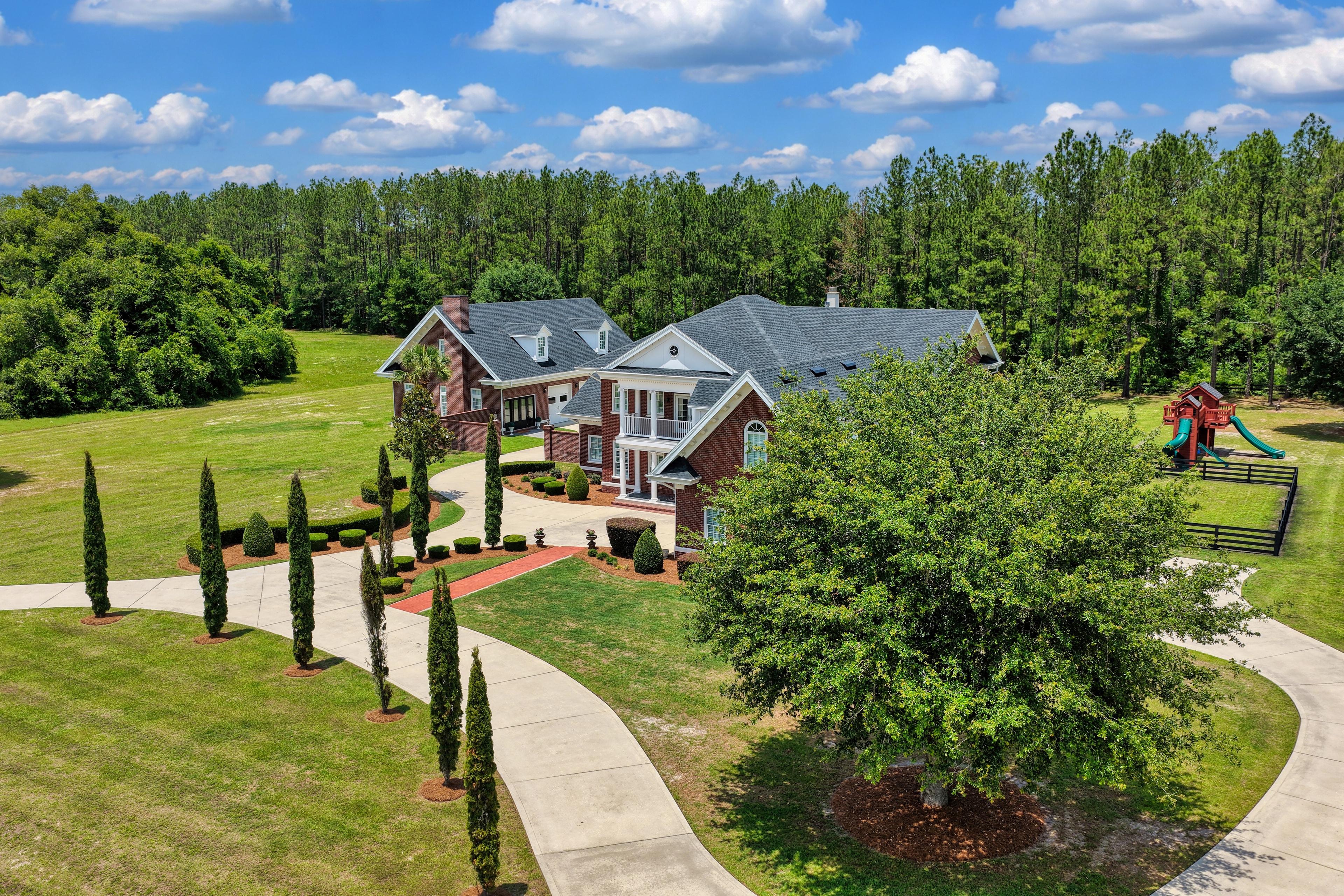
Aerial drone photography consistently outperforms ground-level exterior shots as hero images for one simple reason: novelty. A bird's-eye view of a property is not how buyers normally see homes. It breaks the visual pattern of the scroll and demands attention.
For properties where the land, water, or neighborhood context is a selling point, an aerial hero image communicates more information in a single frame than any ground-level shot can. It answers the questions buyers didn't know they had: How big is the lot? Is there really water access? What does the neighborhood look like?
Interior Shots: When They Work as Heroes
For certain property types — luxury condos, historic homes with exceptional interior details, properties where the interior is dramatically better than the exterior — leading with an interior shot can be highly effective.
The key is that the interior shot must be genuinely stunning. A well-lit, wide-angle shot of a chef's kitchen with high-end finishes can stop a scroll just as effectively as an aerial shot. A mediocre interior shot as a hero image is worse than a mediocre exterior shot.
The Role of Lighting
Across all categories of hero images, lighting quality is the single most consistent predictor of click-through performance. Professional photography uses advanced lighting techniques to:
- Balance the bright Florida sun visible through windows with interior ambient light
- Eliminate harsh shadows that make rooms look smaller and darker
- Enhance the natural color of materials — wood tones, stone countertops, tile floors
- Create the "golden hour" effect on exterior shots that makes every home look its best
Amateur photography — even with a good camera — typically fails on lighting. The result is photos that look flat, dark, or blown out. These images signal to buyers that the listing is not being marketed seriously.
The Three-Second Test
Before finalizing your listing's hero image, apply the three-second test: show the image to someone who hasn't seen the property and ask them what they noticed in the first three seconds.
If their answer aligns with the property's primary selling point — "I noticed the water view" or "I noticed how big the yard is" — the image is working. If their answer is generic — "I noticed it's a house" — the image needs to be reconsidered.
Building a Complete Visual Story
The hero image wins the click, but the full gallery closes the showing request. A complete listing gallery should tell a visual story that moves the buyer from initial interest to genuine desire.
The sequence that works:
- Hero image — The scroll-stopper (aerial, exceptional exterior, or stunning interior)
- Exterior context — Standard front shot, backyard, outdoor living areas
- Interior flow — Living areas, kitchen, primary bedroom in sequence
- Details — Finishes, fixtures, and features that justify the price
- Lifestyle — The view from the back porch, the dock at sunset, the neighborhood
This sequence mirrors the way a buyer would experience the property in person — arriving, walking through, and imagining their life there.
Sky Monkey Media builds complete listing media packages that cover every element of this visual story, from aerial hero shots to interior details to lifestyle imagery.
Ready to build a listing that wins the scroll? View our packages or book your shoot today.
Explore Topics
Written by
Sky Monkey Media
Content creator and writer sharing insights and stories.